Workshop with John Goldsby

Lando Music and John Goldsby will present this Workshop on Jazz Double Bass History and Techniques on Saturday, Dec. 3.

Since 1994, John Goldsby  has been a member of the Westdeutscher Rundfunk Big Band (the Cologne Radio Big Band). From 1980 to 1994, John lived in New York City and was an active fixture on the New York jazz scene, performing everywhere from Carnegie Hall, to the nightclubs of Greenwich Village, to concert stages around the world. John is actively involved in the jazz scene as a bassist, bandleader, composer, teacher, clinician and author.
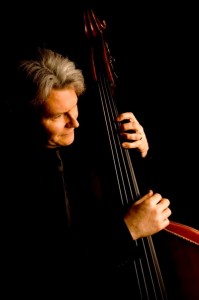
John Goldsby is well-known as a jazz educator and has taught at the Folkwang Hochschule Essen, Cologne Musik Hochschule, William Paterson College, Long Island University, and Columbia University. He also teaches at Jamey Aebersold’s Summer Jazz Clinics and he has recorded many educational jazz records for Mr. Aebersold.

The Jazz Bass Book is his most recent book, documenting jazz bass players and their techniques from a historical perspective. This first-of-its-kind work is filled with transcriptions, historical and technical information, discographys, and Goldsby’s insightful and inspiring writing. A play-along CD is included for the reader/student to use with written etudes, patterns, scales, and improvised solos and bass lines.
John Goldsby has written two other instructional method books: Bowing Techniques for the Improvising Bassist, and Bass Notes. Bass Player magazine says, “Bass Notes is an excellent resource for intermediate to advanced jazz bassist.” The National Association of Jazz Educators says, “Bowing Techniques should be a required publication for upright bassists!” Since 1990, John Goldsby has been a featured writer for Bass Player Magazine with his columns “The Tradition,” “Mastering Jazz,” and “Jazz Concepts.”

The workshop is for bass players of all levels – from beginners to students to professionals. Participation fee is 20 €.

Location: The “Freitagsküche” at Mainzer Landstrasse 105, Ffm
(at the Lando Music premises)
Date: Saturday, December 3., 12 to 5 p.m.
Directions: 3 minutes walking distance from the Frankfurt central station

During the intermission and after the workshop, there is also the opportunity to chat and play and test Christopher basses, the Eminence bass, Presto strings, pickups and amplifiers.

Registration form after the click …

Looking forward to meet you there, Jonas
Pickup comparison recordings

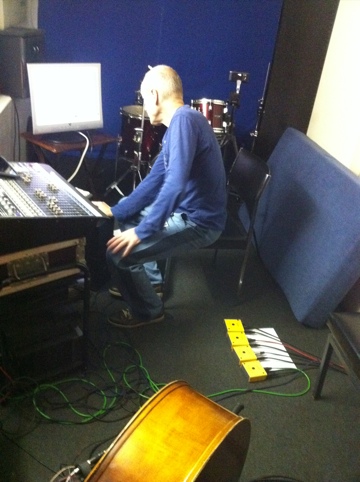
I just uploaded a couple of recordings I recently made of my pickup testing bass (thanks at Michael Höfler for help and support). The testing bass has not less than seven pickups mounted, which can be used at the same time.

The files were recorded simultaneously (multi track), with no processing or effects at all. The dpa 4099 microphone and the Bassbalsereit Studio (with built-in preamp) went directly into the mixing console. The Ehrlund EAP was recorded with the Ehrlund preamp, for the other pickups I used the Lehle XLR Sunday Driver for buffering (impedance matching). The Lehle SD has no EQ, just a gain control, so the effect should be the same for all pickups.

[soundcloud url=”http://api.soundcloud.com/playlists/1120457″ params=”show_comments=true&auto_play=false&show_playcount=true&show_artwork=true&color=ff7700″ width=”100%” height=”225″ ]
[soundcloud url=”http://api.soundcloud.com/playlists/1120410″ params=”show_comments=true&auto_play=false&show_playcount=true&show_artwork=true&color=ff7700″ width=”100%” height=”225″ ]

Hear my transducer comparison files at http://soundcloud.com/landomusic/sets

Some general thoughts about these recordings: Unlike when you record a CD, I didn’t try to get the best out of each pickup. After installing and adjusting each pickup for best results, I just plugged in (taking care of impedance matching and gain), and that’s it. That’s not what you usually do on stage: you have an amp, which colours the sound, a cab, which also colours the sound, and after all, you have the room acoustics which change the results pretty much, too. These recordings show the basic characters of the pickups – the sound you’ll get from them on stage is a another cup of tea!

(The bass is an old German flatback of average quality, strung up with Spirocore Weich, which probably every Jazz bassist knows.)

BBC suggests to use earplugs

The BBC has published a report about protecting your ears, if you work as a musician in an orchestra. Using earplugs and sitting further apart are two of the suggestions. Players are also told to consider chewing gum to avoid a clenched jaw, which can exacerbate symptoms of tinnitus, although the report concedes that chewing gum ‘may not be appropriate on stage’.

Download brochure as PDF

YouTube tipp: Arthur Harper with Wes Montgomery

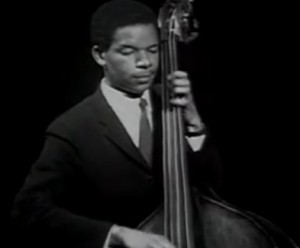
While watching some YouTube clips of one of the greatest guitarists ever – Wes Montgomery –  I became aware of the band’s bass player: Arthur Harper, unknown to me until watching this footage, taken at Wes’ concert tour in 1965 in Europe. But not knowing his name is probably just my fault: he played with the Charlie Parker All Stars, vocalist Betty Carter, pianist Bud Powell, and was part of J.J. Johnson’s world-traveling sextet for many years. He passed away in 2004.
His playing is very interesting, so I really wonder why his name lacks wider recognition.
But the first thing that attracted my attention was Harper’s weird left arm position. His left forearm is almost parallel to the neck at the beginning of his solo – something that is widely considered as a very bad habit. He also stands very close to the bass, leaning over it while keeping his back upright.
Probably, I should have listened to him first, rather than watching him. I really dig his playing, and the whole band is just amazing.

[youtube=http://www.youtube.com/watch?v=PTMfSBRvfiw]

13 days in Paris

Minoru Kimoto of Yamamoto Strings (Tokyo, Japan) has send me a YouTube link of double bassist Yoshi Utumei, playing arco on Presto Jazzicato Tungsten strings.
The Presto Jazzicato string has a steel core with black nylon wrapping. We (the Presto staff and I) designed the Jazzicato strings primarily as a (Jazz-) pizzicato string. But Yoshi’s performance shows that they are a fantastic orchestral arco string, too! Yoshi’s tone has a nice, cello-like timbre, but doesn’t lack the deep fundamental bass.
In comparison, the Jazzicatos’ tension is already low, and putting them on a 1/2 size bass lowers the tension even more (due to the shorter string length). I guess his bass is pretty easy to play.

Instrument: Montelibro 1/2 size
Strings : Presto Jazzicato Tungsten
Bow: Pfitzner (half black, half white hair)
Bassist: Yoshi Utumei, Piano: Acchan Kobe

[youtube=http://www.youtube.com/watch?v=jN1Q2t6U4ZY]